Consumption as leisure

Over the past few weeks, I've come to realise just how much consumption is present in across nearly every aspect of my daily life. I used to think of consumption from a narrower and more traditional perspective which is purely economic transaction driven by necessities or practical utility such as buying groceries or paying for transport. However, taking the time to think about it and looking at my actual habits and routine, I realised that my consumption patterns extends far beyond utility. It also forms part of how I spent my free time in terms of leisure such as gaming.
I used to think of gaming like a simple hobby that I enjoy during my free time to escape from reality. However, looking back at it, I realised how much consumption is integrated in that aspect of my life and one game that I particularly enjoy playing is called Valorant which is a shooting game. Whenever I log into it, I realised that the first thing I do is not even to start playing it. Instead, my routine turns into a consumer behavior. I normally check the daily featured virtual store in the game that sells limited-time items such as weapon skin bundles, aesthetic weapon skins that renew on a daily basis and I check my progress on the battle pass.

This seamless blend of entertainment and retail explain Timothy's (2005) theoretical work on how modern commercial environments integrate shopping with leisure. As Timothy (2005) mentions, spaces of consumption are intentionally structured to blur the boundaries between recreation and shopping, turning browsing itself into an engaging, leisure-focused activity. In my everyday life, Valorant act as a modern, virtual shopping center where time limited skin drops and seasonal events turn casual play into behaving like a consumer.
Moreover, my motivation to engage with these digital items reflects this psychological framework stated by Wang and Hang (2021), who argue that in-game consumption satisfies key internal needs during leisure time. They distinguish between hedonic consumption which is basically seeking immediate pleasure and excitement and eudaimonic consumption which means seeking self-expression, identity and personal taste. When I evaluate Valorant weapon skin, I am engaging in hedonic enjoyment through the visual design while also participating in eudaimonic self-expression when I will be choosing the weapon skin according to my personal taste and that represents more me.
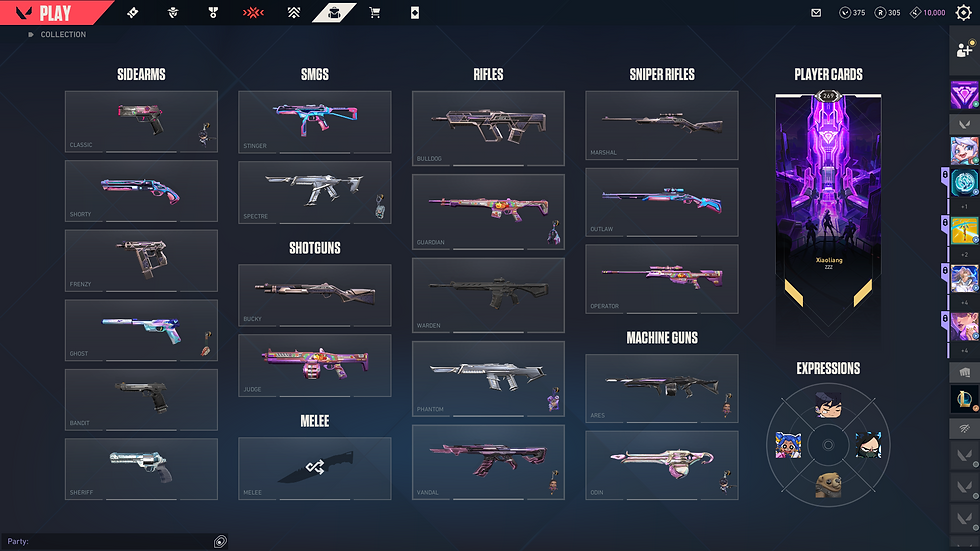
Ultimately, consumption in my day-to-day life isn't just about buying physical necessities. It serves as a core framework through which I relax, express my aesthetic choices and spend my free time.
Moreover, learning this unit about consumption gave me a critical, self-awareness to analyze why I buy and how commercial environments influence my personal behavior.
Timothy (2005) demonstrates that commercial spaces are intentionally designed to make browsing feel like entertainment rather than an economic transaction. Applying this academic perspective to my life helps me recognize that platforms like Valorant aren't neutral gaming spaces as they are engineered environments using scarcity and limited time events to naturally integrate consumer behavior into my daily leisure. Furthermore, Wang and Hang (2021) also helped me understand why I buy these cosmetic virtual items as these purchases support self expression and authenticity. Since Valorant skin do not improve my gameplay, I now see them mainly as a way to express my identity in the game.
These theories also showed me that consumption can shape my behavior after a purchase. Buying a Battle pass encourages me to keep playing to unlock the rewards which shows how digital purchases can influence my time and engagement with the game.

Comments